

Storms in this part of New Jersey have a favorite target: big old trees next to houses. This time, one came down across the front of a Plainfield home — crushing the roof edge, the front overhang, and the gutter line. This is how we restored it.
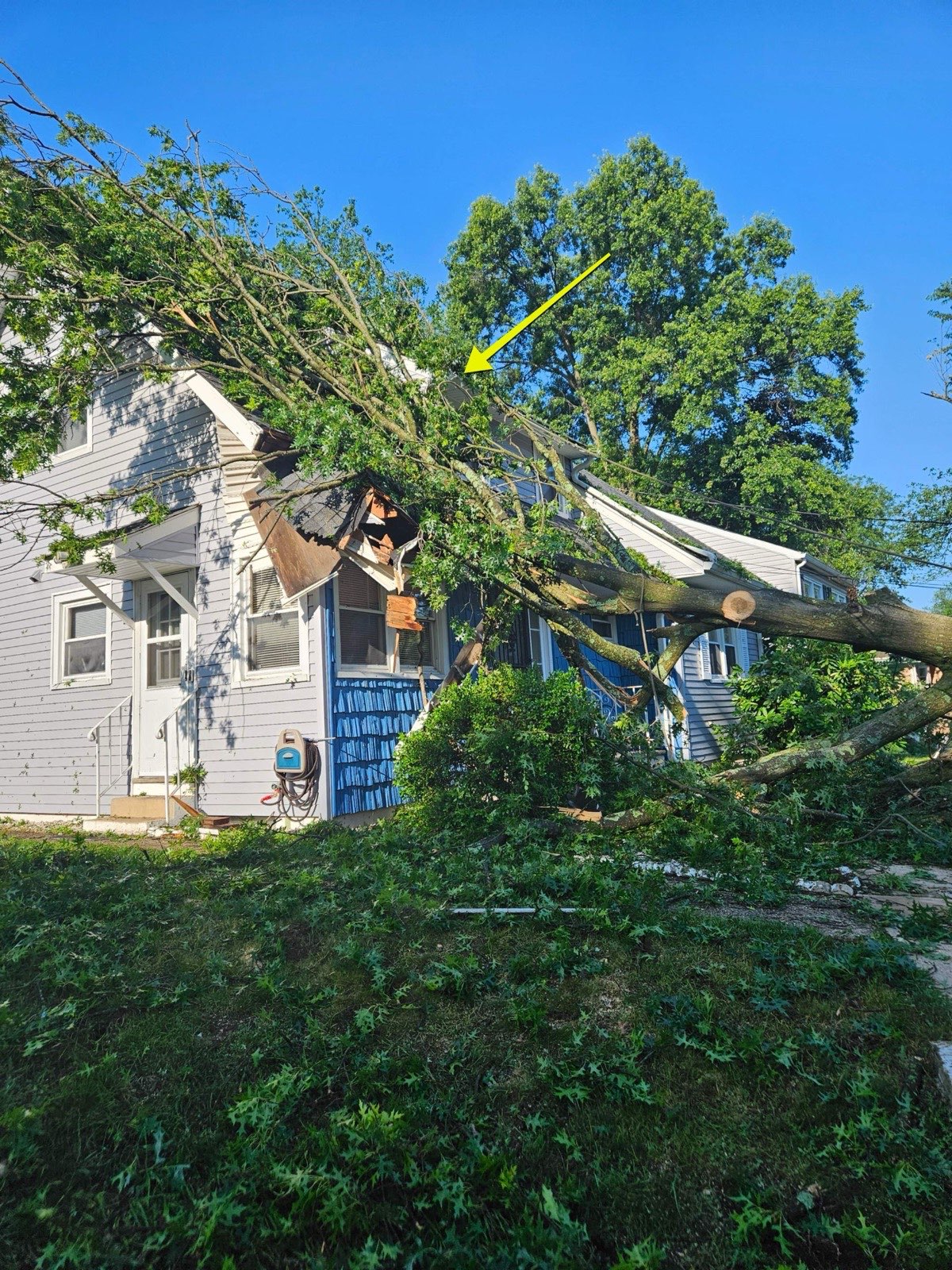
Step 1 — Removing the tree
A tree resting on a damaged roof has to come off in controlled sections — cut and lifted piece by piece, so nothing shifts and breaks more on the way down. Our crew handled the removal and cleared the property.
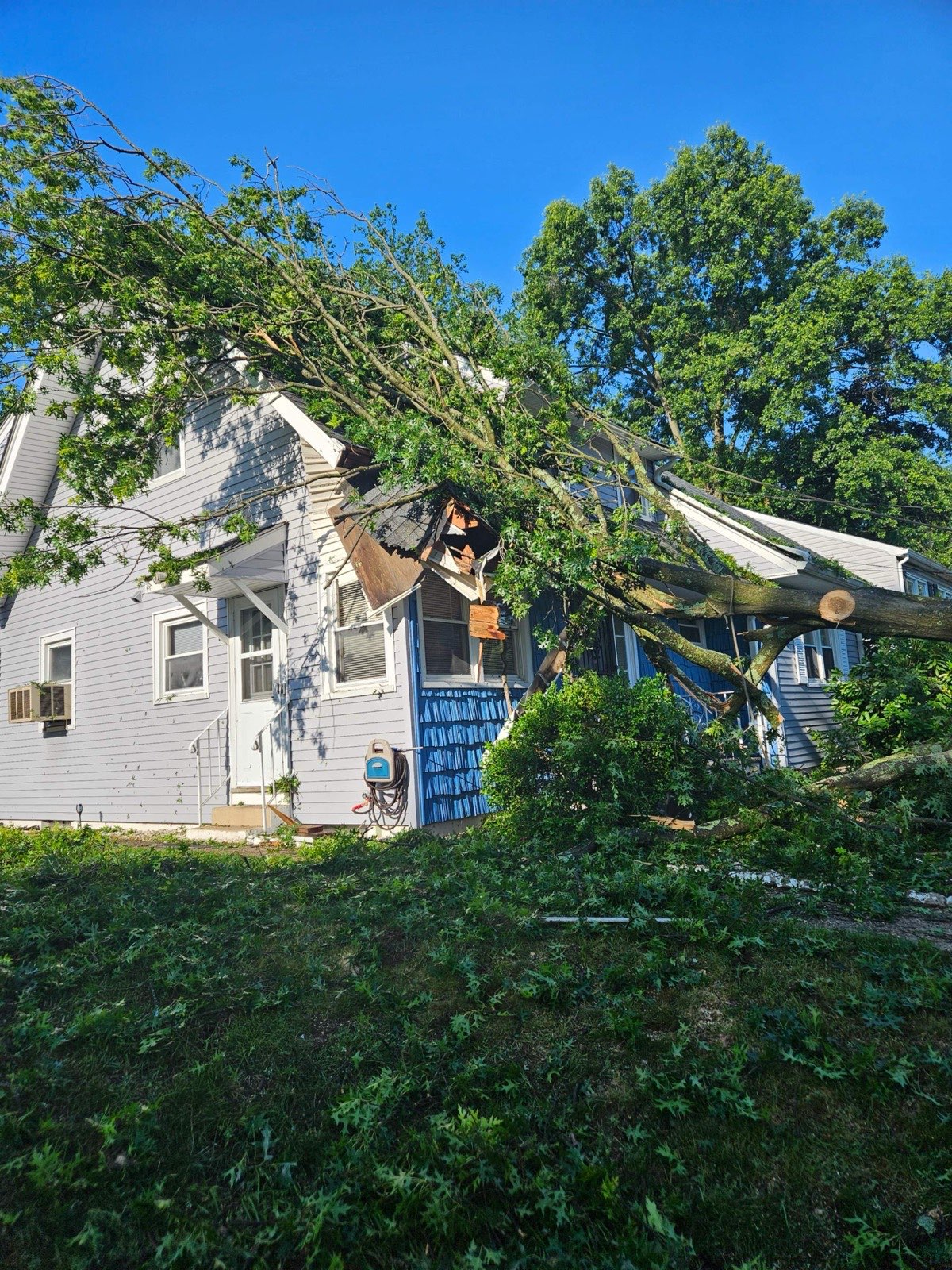
Step 2 — Documenting the damage
Before anything gets rebuilt, everything gets photographed: the crushed overhang, the broken roofline, the torn gutter. That documentation matters — it's what makes the homeowner's insurance claim easier to review and approve.
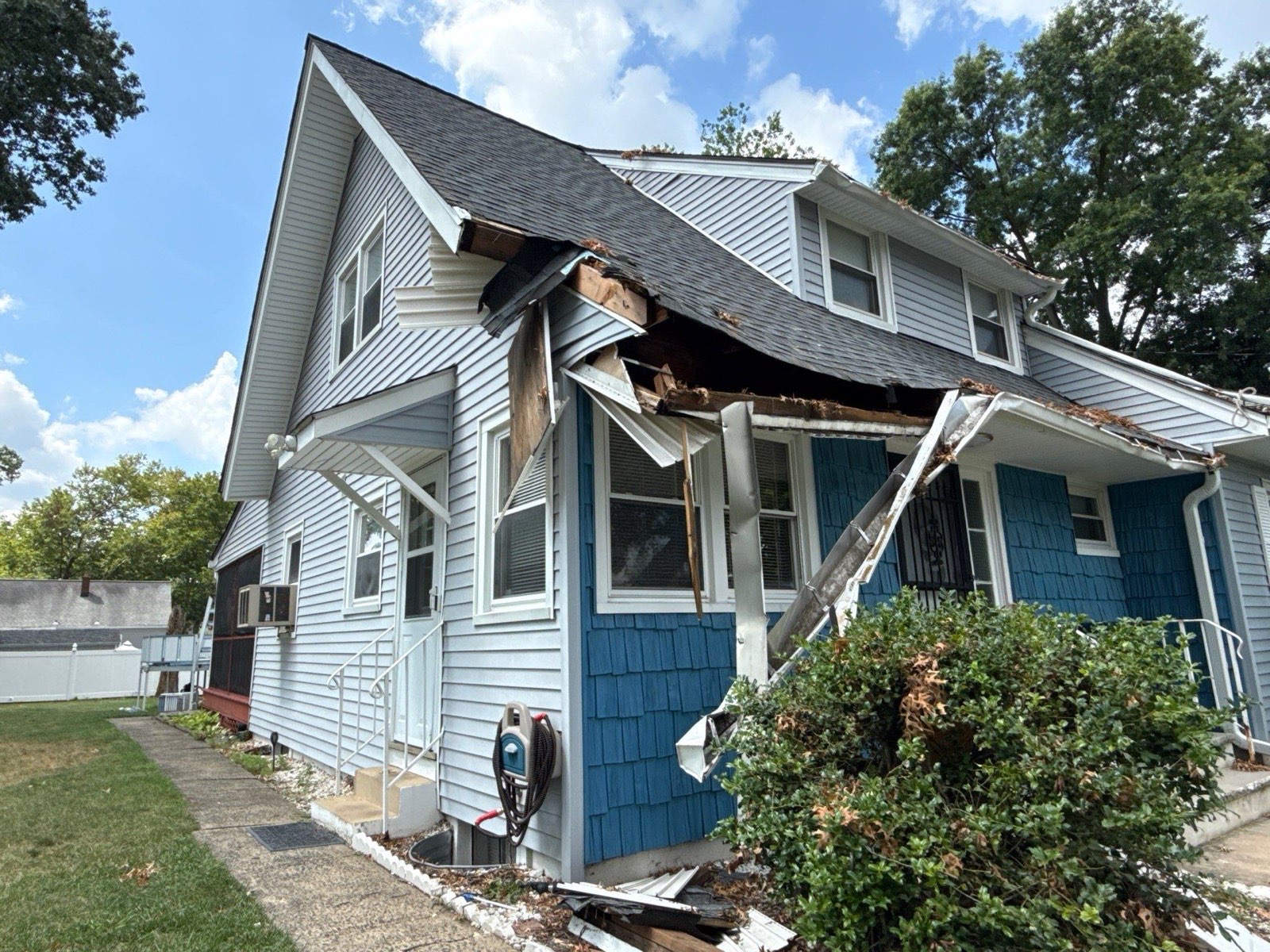
Step 3 — Protecting the home
A damaged roof is an open door for the next rain. We sealed the ridge and the damaged sections under a secured tarp, keeping the home dry while the insurance process and the restoration plan moved forward.
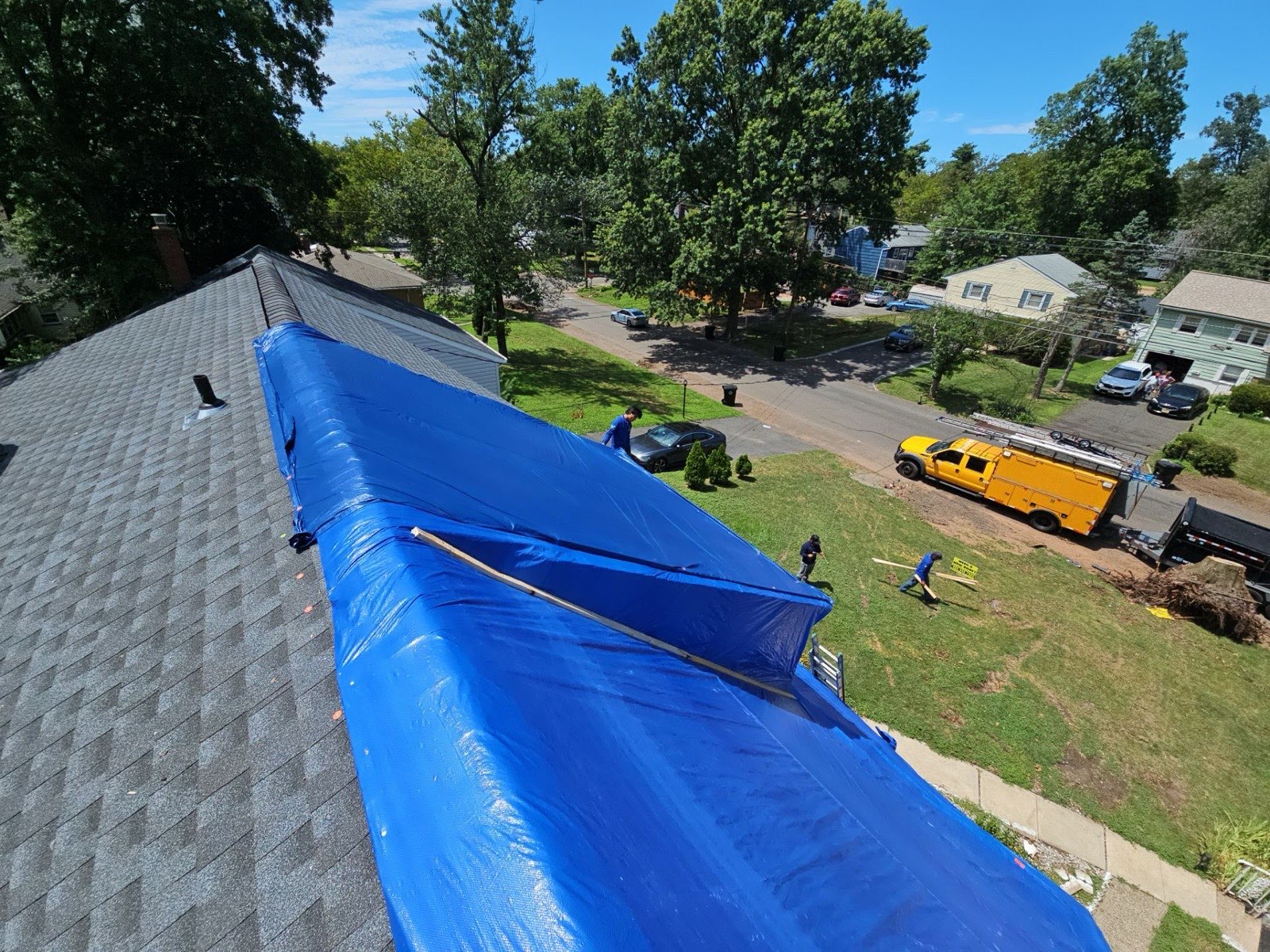
Step 4 — The full restoration
Then came the rebuild: tear-off to the structure, the front overhang framing rebuilt, all-new plywood decking, synthetic underlayment with Ice & Water barrier, and the new shingle system over all of it. Not a patch over the damage — a new roof from the wood up.
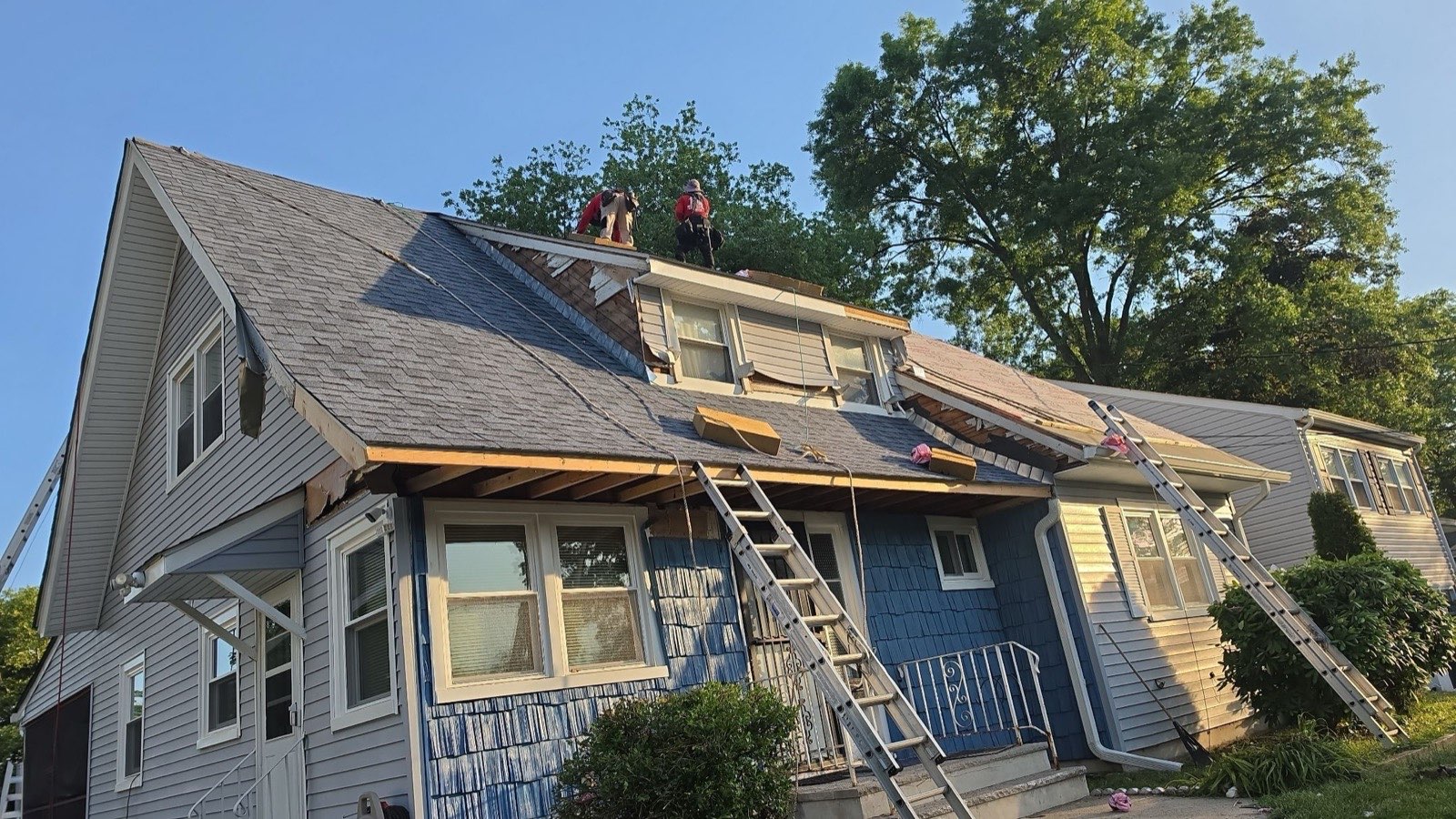
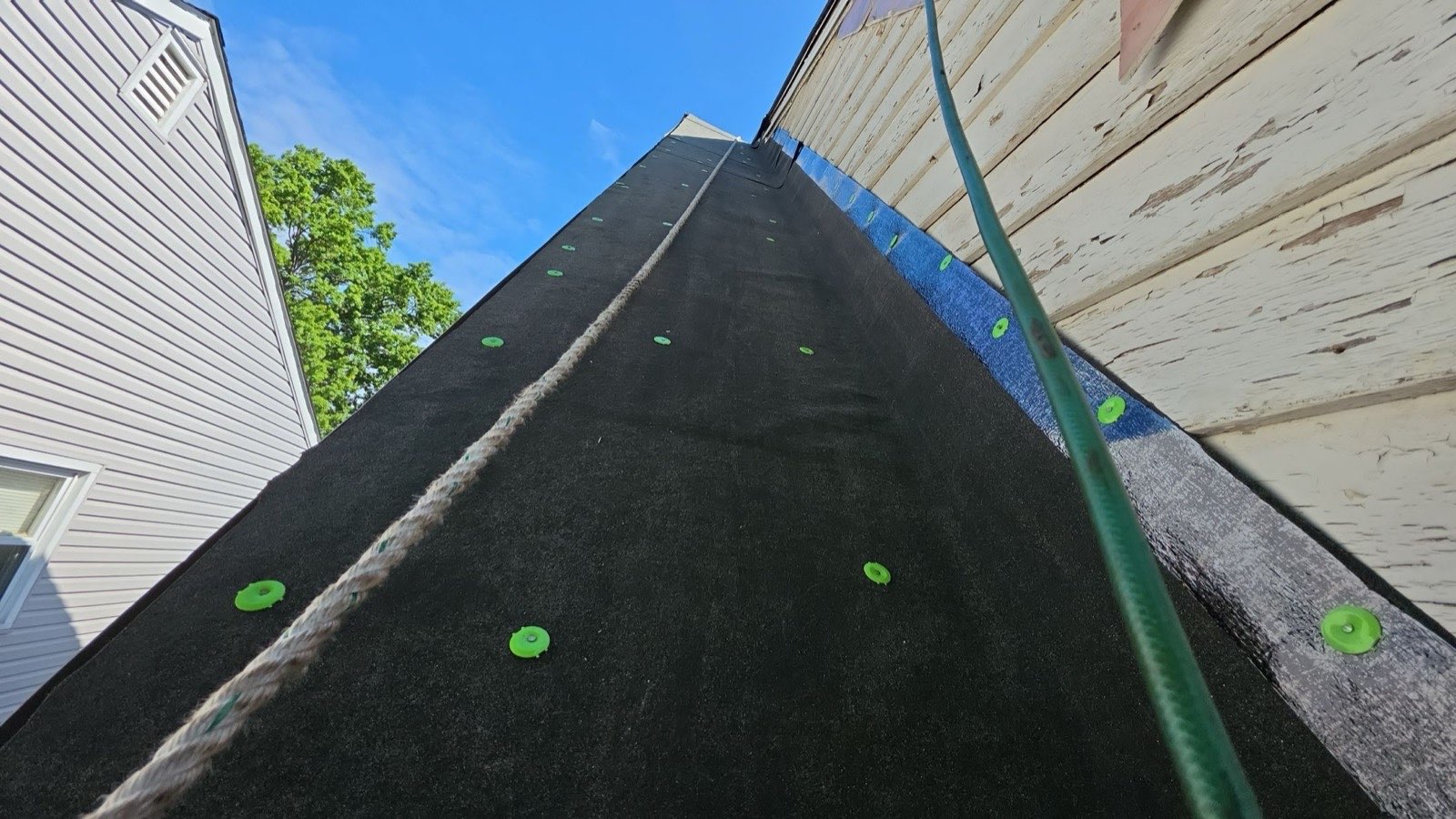
Complete
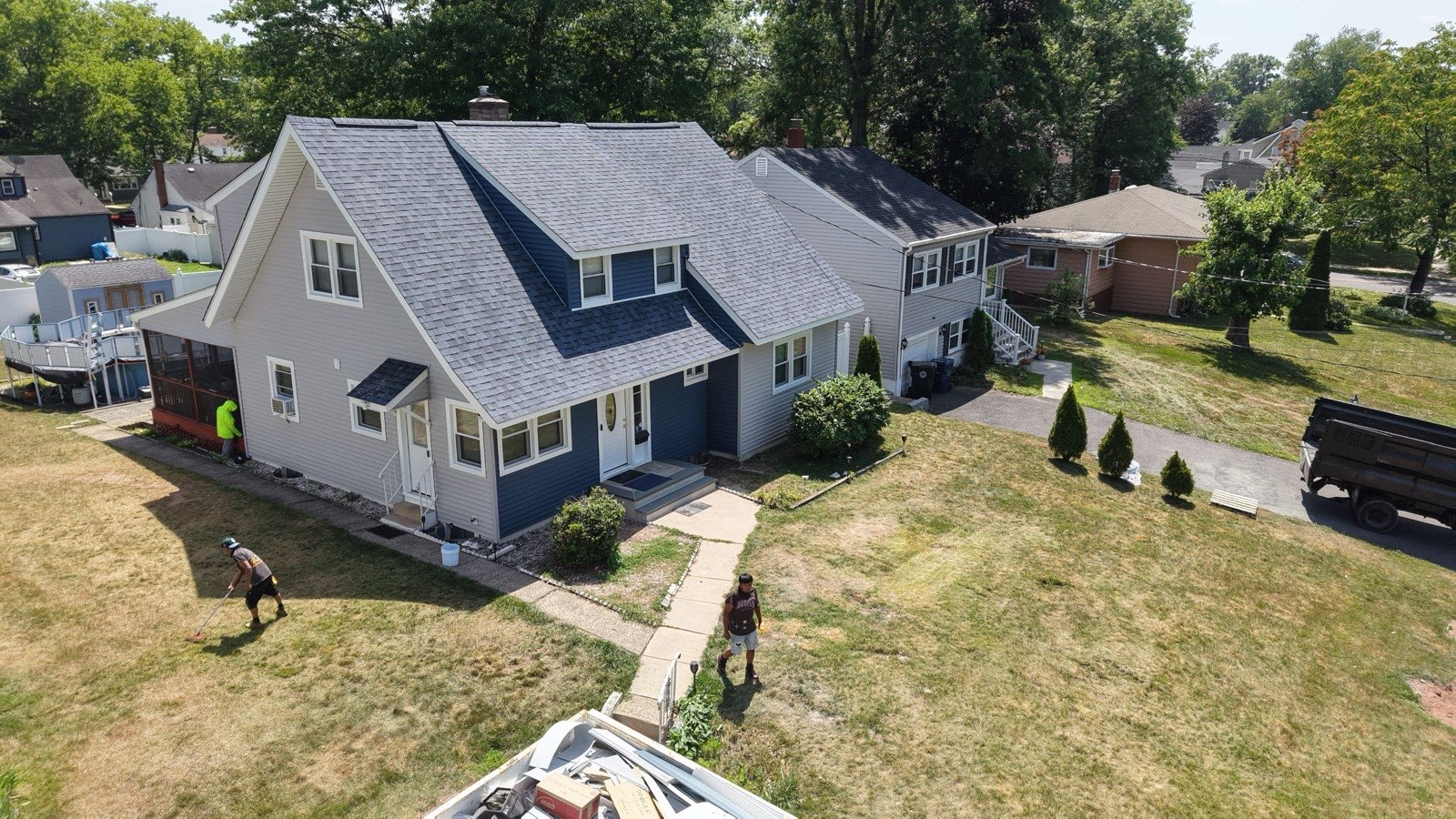
The best view of a finished roof is from above. New system across the entire home, the front line continuous and clean, and a property ready to hand back.
Storm damage? Call us first.
If a tree, wind, or hail ever finds your roof, call (908) 279-0901. Fast response, thorough photo documentation that makes your insurance claim easier to approve, and one company from emergency to final walkthrough — that's Hive Response™.

From the Hive 🐝
RESTORHIVE Roofing & Restoration — New Jersey's roof replacement specialists. Free inspections with full photo reports, a 20-year workmanship guarantee, and a crew that treats your home like the hive. (908) 279-0901 · Get your free inspection →